
Start the Trip Before You Leave the Driveway
A safe long drive starts before the engine is fully warmed up. Whether the trip is for a family vacation, provincial travel, business cargo, or rainy-season driving, the vehicle should be checked before it is asked to run for hours on changing road conditions.
Pre-trip inspection helps catch problems that may not show up during short city use. It can reduce the chance of overheating, tire trouble, weak braking, poor visibility, battery failure, and delays that could have been prevented with a simple check.
At Northeast Car Care Centre, we look at preparation as part of proper vehicle care, because every journey deserves professional attention before the road gets demanding.
Why Pre-Trip Inspection Matters
Long-distance driving gives the vehicle a harder workload than routine errands. The engine runs continuously, tires build heat, brakes may work harder on downhill roads, and the cooling system must keep temperature stable even in traffic or hot weather.
Philippine roads can also change quickly. Rain, potholes, rough provincial sections, construction areas, steep climbs, loaded vehicles, and sudden braking can expose a weak part faster than normal daily use.
Inspection standards used for roadworthiness include basic safety systems such as lights, horn, mirrors, wipers, tires, wheel fasteners, steering, and brakes. These are also the items a driver should think about before a long trip.
1. Check Your Tires First
Tires carry the full load of the vehicle and are the only parts touching the road. Before traveling, check all four tires and do not forget the spare.
Use the vehicle manufacturer’s recommended pressure and check pressure while the tires are cold for a more accurate reading. The number printed on the tire sidewall is not the everyday recommended pressure for your vehicle.
- Correct tire pressure
- Enough tread depth for wet-road grip
- Uneven wear on the inner, center, or outer tread
- Cracks, cuts, bulges, or exposed cords
- Valve caps and valve condition
- Loose or damaged wheel nuts
- Spare tire pressure and usability
2. Test the Brakes
The brake pedal should feel firm, smooth, and predictable. If the pedal feels soft, the vehicle pulls while braking, or you hear squeaking or grinding, have the system inspected before leaving.
A long trip should not be the time when brake weakness is discovered. Braking problems can become more serious when the vehicle is loaded, traveling downhill, or driving through wet roads.
- Brake pad or shoe condition
- Brake fluid level
- Visible fluid leaks
- Rotor or drum condition
- Parking brake function
- Dashboard brake warning light
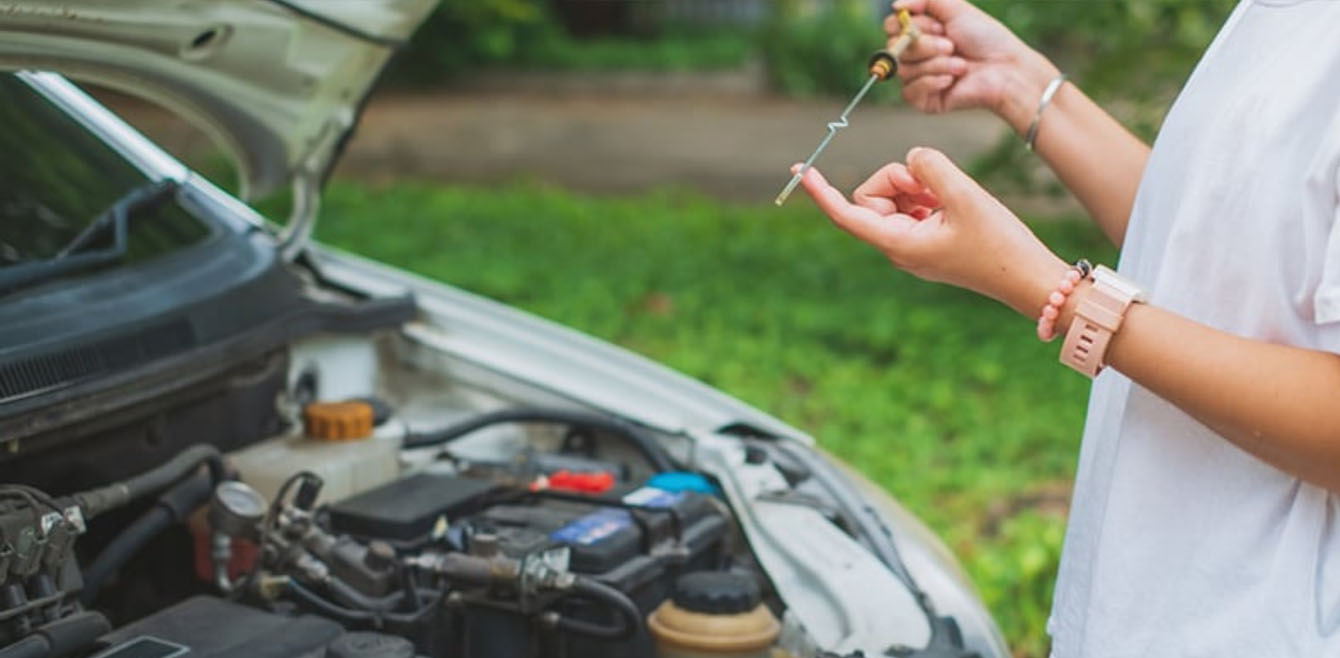
3. Inspect Engine Oil and Other Fluids
Fluids help protect the engine, cooling system, brakes, steering, transmission, and visibility systems. Low, dirty, or leaking fluid can lead to overheating, hard steering, poor braking, shifting issues, or engine damage.
If an oil change or scheduled service is already close, it is usually better to handle it before the trip instead of hoping the vehicle will make it back first.
- Engine oil
- Coolant
- Brake fluid
- Automatic transmission fluid or clutch fluid, if applicable
- Power steering fluid, if applicable
- Windshield washer fluid
4. Check the Cooling System
Overheating is one of the most common long-drive problems. It is more likely when the vehicle is used in traffic, hot weather, mountain roads, or heavy-load conditions.
Never open the radiator cap while the engine is hot. If the vehicle has a history of coolant loss, overheating, or temperature gauge movement, have it checked before the trip.
- Coolant level
- Radiator and hose leaks
- Damaged or swollen hoses
- Loose hose clamps
- Radiator cap condition
- Cooling fan operation
- Temperature gauge behavior
5. Test All Lights and Signals
Lights are not only for nighttime. They tell other drivers where you are, when you are braking, and what direction you plan to move.
Before a road trip, ask someone to stand outside the vehicle while you test the lights, or check reflections against a wall or glass surface.
- Headlights, high beam, and low beam
- Brake lights
- Tail lights
- Reverse lights
- Turn signals
- Hazard lights
- Plate lights
- Fog lights, if equipped
6. Check Wipers and Visibility
Clear visibility is essential when rain starts suddenly. Wipers should move smoothly and clear water without heavy streaks, skipping, or loud dragging sounds.
Also check mirrors and windshield condition. A small visibility issue can become tiring or unsafe during night driving, heavy rain, or bright glare.
- Wiper blade rubber condition
- Washer spray function
- Windshield cracks or heavy scratches
- Side mirror clarity
- Rear-view mirror adjustment
- Washer fluid level
7. Inspect the Battery and Charging System
A battery can seem fine during short trips but struggle after repeated stopovers or long electrical use. Road trips often use headlights, air-conditioning, phone charging, navigation, dashcams, and other accessories.
If the engine cranks slowly, terminals are corroded, or the battery is already old, have it tested before traveling.
- Battery age
- Terminal corrosion
- Loose clamps
- Alternator charging condition
- Slow engine cranking
- Dashboard battery warning light
8. Listen for Suspension and Steering Problems
Suspension and steering condition affects comfort, control, tire wear, and safety. These systems matter even more when the vehicle will carry passengers, luggage, or cargo over rough roads.
Noise or looseness underneath the vehicle should be checked before a long trip, especially if the route includes provincial roads, mountain roads, or road repairs.
- Steering pull
- Unusual vibration
- Clunking noise
- Loose steering feel
- Uneven tire wear
- Excessive bouncing
- Noise when turning
9. Prepare an Emergency Roadside Kit
Even a well-maintained vehicle can still experience a delay or roadside problem. A basic kit helps keep the situation safer while you call for help or address a simple issue.
- Tire pressure gauge
- Jack and lug wrench
- Early warning device
- Flashlight
- Jumper cables or jump starter
- Basic tools
- First aid kit
- Drinking water
- Phone charger or power bank
- Umbrella or raincoat
- Work gloves
- Copy of vehicle documents
- Roadside assistance contact numbers
10. Do Not Ignore Warning Signs
Small symptoms can become big problems when the vehicle is under continuous use. If something feels different before a long drive, it is better to inspect it early than deal with it on the roadside.
- Dashboard warning lights
- Overheating or temperature changes
- Oil, coolant, or brake fluid leaks
- Weak air-conditioning
- Brake noise
- Steering vibration
- Hard starting
- Burning smell
- Unusual engine noise
- Poor acceleration
- Tire vibration at highway speed
Simple Pre-Trip Timeline
- 3 to 7 days before the trip: Schedule preventive maintenance if service is due. This gives enough time for inspection, parts replacement, repairs, and road testing.
- 1 day before the trip: Check tire pressure, lights, fluids, wipers, documents, tools, and emergency items.
- On the day of the trip: Do a final walkaround, check for leaks, look at the tires, test lights, adjust mirrors, and make sure everyone uses a seat belt.
Final Reminder
A safe long trip is not only about reaching the destination. It is also about making sure the vehicle is ready before the journey begins.
Before your next long drive, take time to inspect the tires, brakes, fluids, lights, wipers, battery, cooling system, and emergency tools. A short preparation today can help prevent breakdowns, delays, and unsafe situations on the road.
Need a pre-trip safety check? Visit Northeast Car Care Centre or call 0917-578-0410.
Northeast Car Care Centre - Professional Care For Every Journey
References
These sources were used only to verify safety references and minimum tread-depth guidance. The article text above is original Northeast Car Care Centre educational content.
Join the discussion
0 Comments
Share a helpful thought or question about this article.